
Lipscomb County Traffic Cases Follow the Citation's Court
The citation is the most reliable first clue because traffic matters do not all go to the same place. A JP citation follows the countywide Justice of the Peace docket; a Booker or Follett citation follows that city's listed municipal court. Higgins and Darrouzett require confirmation because the current municipal directory reviewed did not list them. The Sheriff can answer service or custody questions but cannot set the traffic case's payment or hearing terms.
If the paperwork is unclear, call the court named on it and ask for routing. Do not choose a court based only on where the person lives or where a traffic stop occurred. The city court record route explains the municipal-court gap.
How Traffic Warrants Work in Lipscomb County
A traffic citation or fine-only case can lead to a failure-to-appear process when a person misses a required setting or does not satisfy a judgment. Depending on the case and procedure, a court may issue a warrant or capias pro fine and may report an eligible citation to DPS. The court named on the paper controls the case, not the countywide Sheriff or a payment vendor.
Lipscomb County JP handles county and precinct Class C traffic matters. Booker and Follett have listed municipal courts for city ordinance and state-law fine-only matters. For Higgins or Darrouzett, the current municipal-court directory reviewed did not list a court; use the court printed on the citation and ask the city or JP for routing.
Lipscomb County JP Traffic Cases Have a Published Payment Route
The JP page says outstanding traffic fines may be paid online or by phone. Its Certified Payments route uses bureau code 3412016, and the separate phone payment number is 1-866-549-1010. Call the court at 806-862-3844 first to confirm that the case belongs there, what amount is due, and whether an appearance is still required. The page does not say payment alone recalls a warrant.
For a city citation, use that city's court rather than the JP payment link. A payment accepted for one case cannot clear process issued by another court.
Review the JP's official payment instructions.
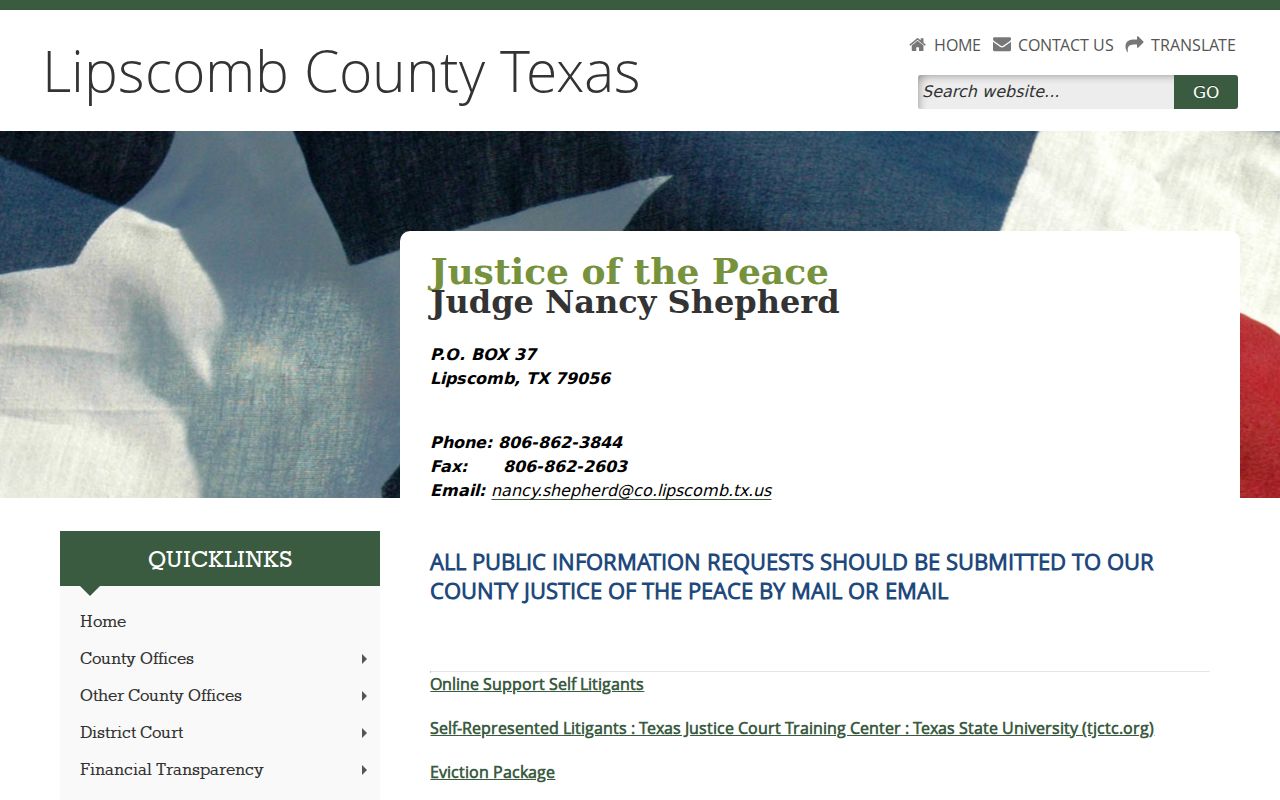
The page publishes a bureau code and phone route; confirm the case and clearance effect with the JP clerk.
Lipscomb County Traffic Warrant Checks
There is no county traffic-warrant search form. Begin with the citation number and issuing court, then call the court for current status. The state citation and notice search may help locate a case reference, but it is not a warrant database. A county JP citation and a city-court citation must be checked with the court that owns that docket.
- Read the citation and note its cause number, issuing court, and response date.
- Use the Texas Courts citation and notice interface only as a supplemental citation search.
- Call the Lipscomb JP at 806-862-3844, Booker at 806-658-4579, or Follett at 806-653-2601 when named.
- For Higgins or Darrouzett citations, verify the issuing court with the city or county JP; ask counsel about next steps.
Booker and Follett Traffic Warrants Stay With Their Courts
The Texas Judicial Branch directory lists Booker Municipal Court at 806-658-4579 and Follett Municipal Court at 806-653-2601. Neither city page inspected offers a public citation or warrant portal, payment/recall form, or bond schedule. Booker publishes court procedure information; Follett's city site lists general services and City Hall details, so call before going to confirm the court counter.
For a citation from Higgins or Darrouzett, the OCA directory did not show a municipal court listing. That is a directory gap, not proof that no city process exists. Read the issuing-court line and ask the city to route the question. Higgins' online portal is utility-only and must not be used as a traffic payment site.
Traffic Warrants: What They Show
No local traffic-warrant sample or status code inventory was located. A court clerk can confirm which citation, court setting, or judgment is tied to a record. Ask for the cause number, exact balance if any, and whether the court has issued a warrant, capias, or FTA process. These terms identify legal steps; they are not a driving history or insurance record.
| Citation or cause number | No local sample published Read it from the citation or request it from the court. |
|---|---|
| Offense | Ask which citation or ordinance is in the court file. |
| Issuing court | Confirm JP, Booker, Follett, or the court named on the citation. |
| Fine or costs | Request the current court balance and permitted payment options. |
| Process status | Ask whether an FTA, warrant, or capias pro fine remains open. |
Texas Courts Citation Search Has Limited Traffic Details
The state interface provides text, name, cause number, court or county, and status search controls, plus Search, Clear Filters, and New Search buttons. It accepts a trailing wildcard in the text field. Those controls help find a citation notice, but the interface is not a Lipscomb County traffic-warrant list and does not determine whether a local order was recalled.
Copy the court and cause number from a result and call that office. If no result appears, use the paper citation and contact the issuer directly. The county sources do not publish local traffic warrant codes, sample entries, or an update cadence.
Open the Texas Courts citation and notice search.
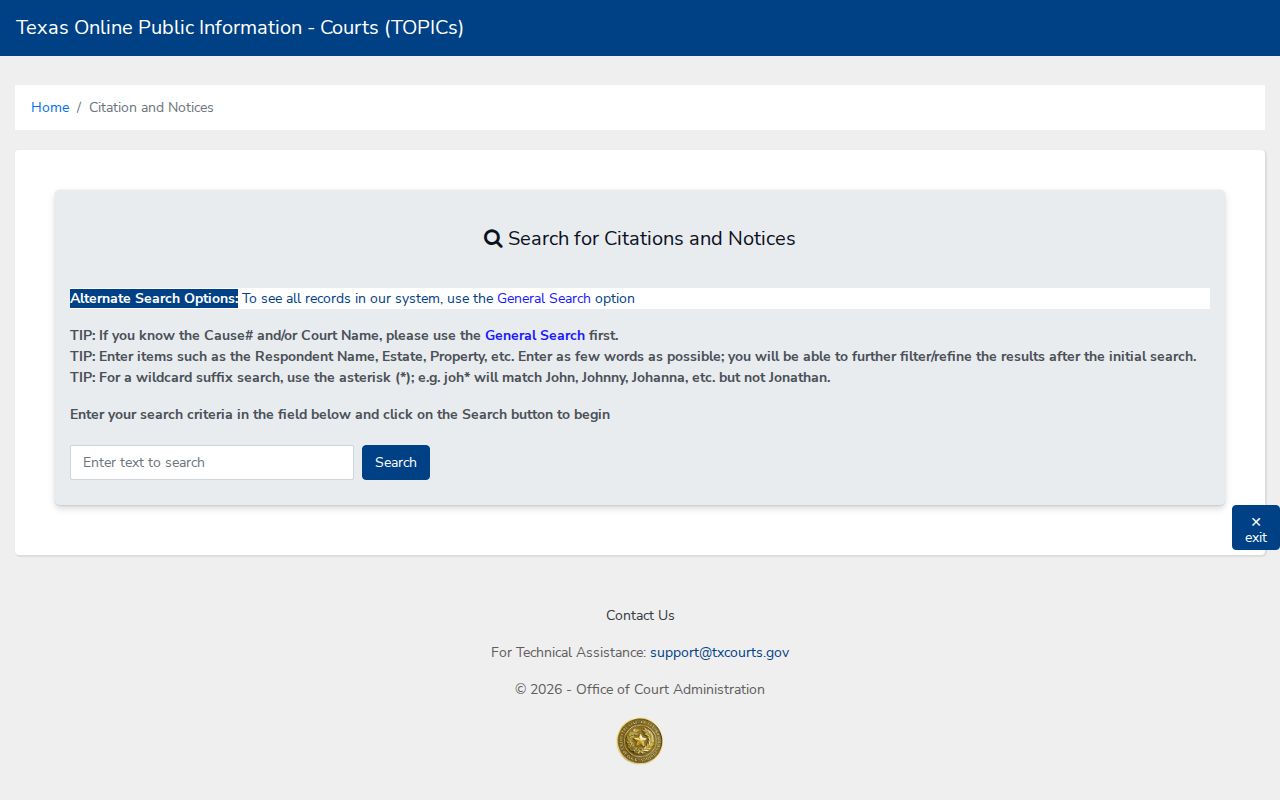
A matching notice can help route a question, but only the issuing court confirms warrant status.
Clearing a Lipscomb County Traffic Warrant
Ask the issuing court for the balance and whether payment, a new date, an appearance, bond, or a motion is required. For eligible JP fines, use the court-approved route; a city case follows its own procedure. Do not assume another court's payment clears the traffic matter.
Chapter 45A requires an initial missed-setting notice within 30 days with a new date, court details, alternatives to full payment, and possible credit for qualifying confinement. A person may request another date. Before execution, a voluntary good-faith appearance requires recall of an initial-FTA warrant. For a capias pro fine, the court must consider undue hardship and may allow remote hearing when the statute permits. No local remote-hearing form was found; ask the clerk how to proceed.
- Confirm the cause number, status, balance, and required appearance with the named court.
- Ask whether a payment plan, alternate date, or hardship option is available in the case.
- Use only the payment route approved by that court and keep the confirmation number.
- Ask the court to confirm recall and report clearance to DPS when the citation is in FTA/FTP.
Warning: A receipt does not prove recall. Confirm the court's action and ask whether it has sent the needed status update to DPS.
DPS FTA Reporting and Lipscomb County Traffic Warrants
DPS's Failure to Appear/Failure to Pay program can create a license-renewal denial or hold after a reporting court submits an eligible citation. It is not the warrant itself, and it is not a general arrest-warrant search. DPS directs a person to contact each reporting court about fine, court-date, trial, and clearance questions. OmniBase status assistance is listed at 1-800-686-0570.
The DPS FAQ says a closed citation may take up to seven business days to clear from the state system. Keep the court's receipt and ask when to check again if the status remains. No Lipscomb County traffic-amnesty event was located.
Review DPS program instructions.
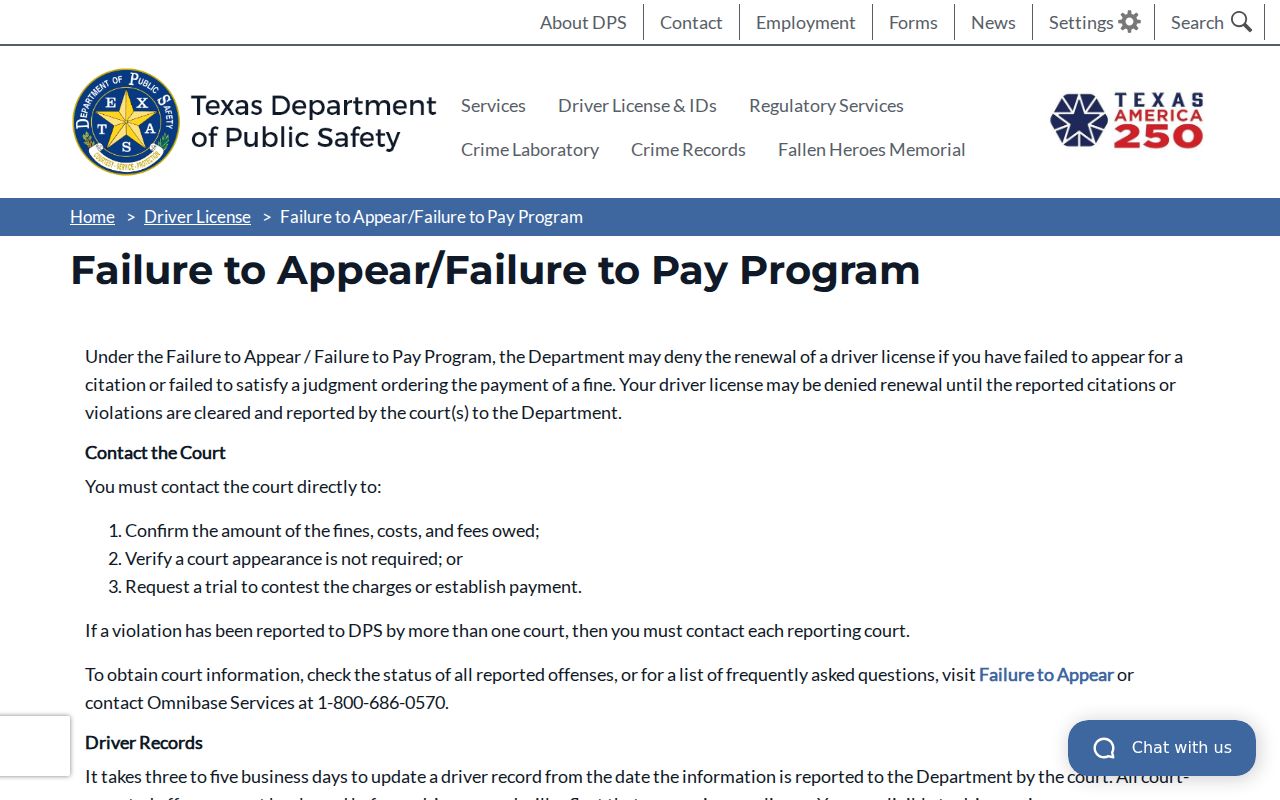
The state channel concerns license status; the court still controls the underlying traffic case and warrant.
How Traffic Warrants Trigger License Holds
A traffic warrant, an FTA process, and a DPS license hold are distinct. One citation can lead to more than one step, but each has its own decision-maker and clearance method. A court issues and recalls process in its case; DPS updates a license-renewal status after the reporting court acts. A payment or appearance should be followed by confirmation from both offices where a hold was reported.
| Mechanism | What Triggers It | What It Does |
|---|---|---|
| Traffic warrant | Court process after a citation or missed setting | Authorizes action under the court's order |
| Failure to appear (FTA) | Missed required court setting | May lead to notice and further court process |
| DPS license hold | Reporting court submits an eligible citation | May deny driver-license renewal until court clearance |