
Lipscomb County Arrest Warrants Use Separate Court Files
Which office can confirm an active warrant depends on the case itself. Felony matters run through the 31st District Court and its District Clerk function. County-court matters go to the County Clerk function in the same office. Lower-court cases sit with the Justice of the Peace or the municipal courts in Booker and Follett. The Sheriff's office can serve papers, but it does not replace any court's docket. A warrant paper that names a court outside Lipscomb County must be taken up with that court, even when the person lives here. Texas keeps no single statewide warrant portal, so a Lipscomb County warrant search always runs through these separate offices.
How Arrest Warrants Work in Lipscomb County
An arrest warrant is a written judicial order. It directs a peace officer to take a named person into custody and bring that person before a magistrate. Texas law generally requires a sworn complaint, identification of the accused or a reasonably definite description, the alleged offense, and the time and place of the offense. A magistrate reviews the legal basis first. Felony cases in Lipscomb County go to the 31st District Court. Their criminal records route through the combined Clerk's Office under the District Clerk function. County-court and lower-court matters follow their own court records. Lipscomb County publishes no online arrest-warrant list. Ask the issuing court or the Sheriff to confirm.
How a Lipscomb County Complaint Reaches a Magistrate
Every Lipscomb County warrant begins with a sworn complaint or another procedure the law allows. The magistrate needs enough information to identify the person and the offense with reasonable certainty. That review is a judicial step. It stands apart from the officer's later work serving the signed process. A warrant is not a Sheriff list entry. Nor is it an accusation copied from a public website. The county's public sources name the District Attorney, District Court, Sheriff, and combined Clerk's Office, but none describe a local warrant application workflow or publish affidavits. For a specific Lipscomb County file, ask the court what is public and whether supporting documents are sealed or restricted.
Arrest Warrants: What They Contain
Lipscomb County publishes no sample warrant, and no local warrant-number format appears anywhere. Ask the clerk. The official instrument, if you can get it, controls. A third-party summary may omit the charge, the court, or a later action.
| Case identifier | No local sample published Request the court's cause or warrant number. |
|---|---|
| Person description | The order identifies the accused or gives a reasonably definite description. |
| Charge / offense | Ask which alleged offense and complaint support the order. |
| Issuing magistrate / court | Confirm the official issuing authority and the clerk that keeps the file. |
| Bond / bail | Ask the court for current conditions; this research found no countywide figure. |
| Date issued | Request the issue date and any later return, service, or recall entry. |
Chapter 15 Sets Lipscomb County Arrest Warrant Requirements
Chapter 15 of the Texas Code of Criminal Procedure covers the complaint, warrant requisites, magistrate action, and execution. The order must identify the accused, or describe the person with reasonable certainty, and state the alleged offense. The statute also addresses public access. Case-specific restrictions can still apply. Lipscomb County posts no sample warrant or indexing convention. When you request a copy, distinguish the warrant from the complaint and any affidavit. A docket entry can be public while its supporting material stays restricted. Ask the clerk what exists in the file. The clerk can explain how to submit a request. Read Chapter 15 of the Texas Code of Criminal Procedure to see the full requirements a Lipscomb County magistrate applies.
The statute sets statewide rules for Lipscomb County arrest warrants; it offers no local warrant lookup and confirms no single case.
How Warrants Get Served in Lipscomb County
The Lipscomb County Sheriff is the countywide law-enforcement contact at 806-862-2611. Another authorized peace officer can serve a warrant too. The county describes no separate warrant unit, no published service schedule, and no public roster. Call the Sheriff for a service question. Call the issuing court for case terms. After an arrest, the person goes through booking and the magistrate process, where the court takes up the charge and bail conditions under Texas law. The county website links to VINELink for custody status. That service answers custody questions, not whether an unserved warrant exists. Confirm the walk-in location before going. County materials list different office and courthouse addresses.
Lipscomb County Sheriff Contact and Warrant Service
The official Sheriff page lists Sheriff Ben Eggleston and the office phone, 806-862-2611. It links to VINELink for custody information. It offers no arrest-warrant search. No active list or warrant phone line either. A job posting shows 105 E Oak Street, Box 120, while the public Sheriff page uses the courthouse location at 105 Oak Street. Call before visiting to confirm the right counter. Lipscomb County approved a Warrant Service Officer Program agreement in August 2025, though the posted agenda does not explain eligibility or service details, so treat it as a program approval rather than a lookup or a promised service method. Check the Sheriff contact page for the current Lipscomb County route.
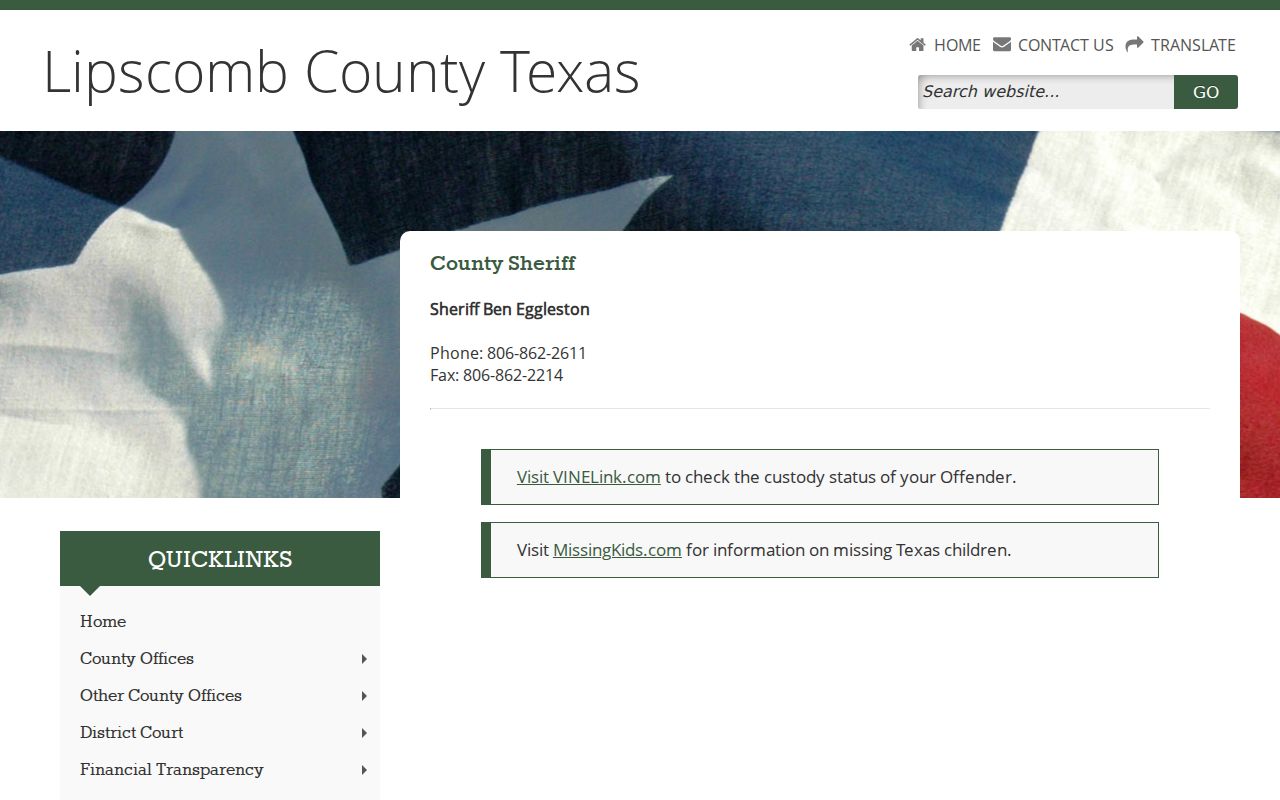
The public page lists the Sheriff's phone and a custody link. Call to confirm a Lipscomb County warrant question and the right office location.
Arrest Warrants, Summonses, and Bench Warrants
A summons tells you to appear; an arrest warrant lets an officer take you into custody. A bench warrant is different again. It grows out of a court proceeding or an unmet obligation. The exact process depends on the case. Lipscomb County keeps these records across different courts, and the Sheriff's role in serving papers does not make the instruments interchangeable. For court-date process, see the bench warrant section.
| Feature | Arrest Warrant | Summons | Bench Warrant |
|---|---|---|---|
| What It Orders | Arrest and presentation before a magistrate | Appear at a stated time or place | Arrest or appearance tied to a court obligation |
| Basis | Judicial review of a complaint or lawful basis | Notice of a filed matter | Failure to appear or comply with a court order |
| Who Issues It | Judge or magistrate | Court or authorized officer, as law allows | Judge in the underlying case |
| How to Respond | Confirm with counsel and follow court instructions | Attend by the date shown | Contact the issuing court about recall or reset |
District Court Records for Lipscomb County Arrest Warrants
Felony cases in Lipscomb County belong to the 31st District Court. Judge Steven Emmert's public page lists the court coordinator and links to the local rules. Warrant and indictment records, though, route through the District Clerk side of the combined County & District Clerk's Office. County-court, JP, and municipal matters sit with other offices. Bring a case number. Ask the clerk whether the docket entry, the warrant, or the supporting affidavit is open to the public. The office closes from noon to 1 p.m. for lunch, so time any visit. Confirm the right counter before you go in person. Review the 31st District Court contact page for the coordinator and local-rules links.
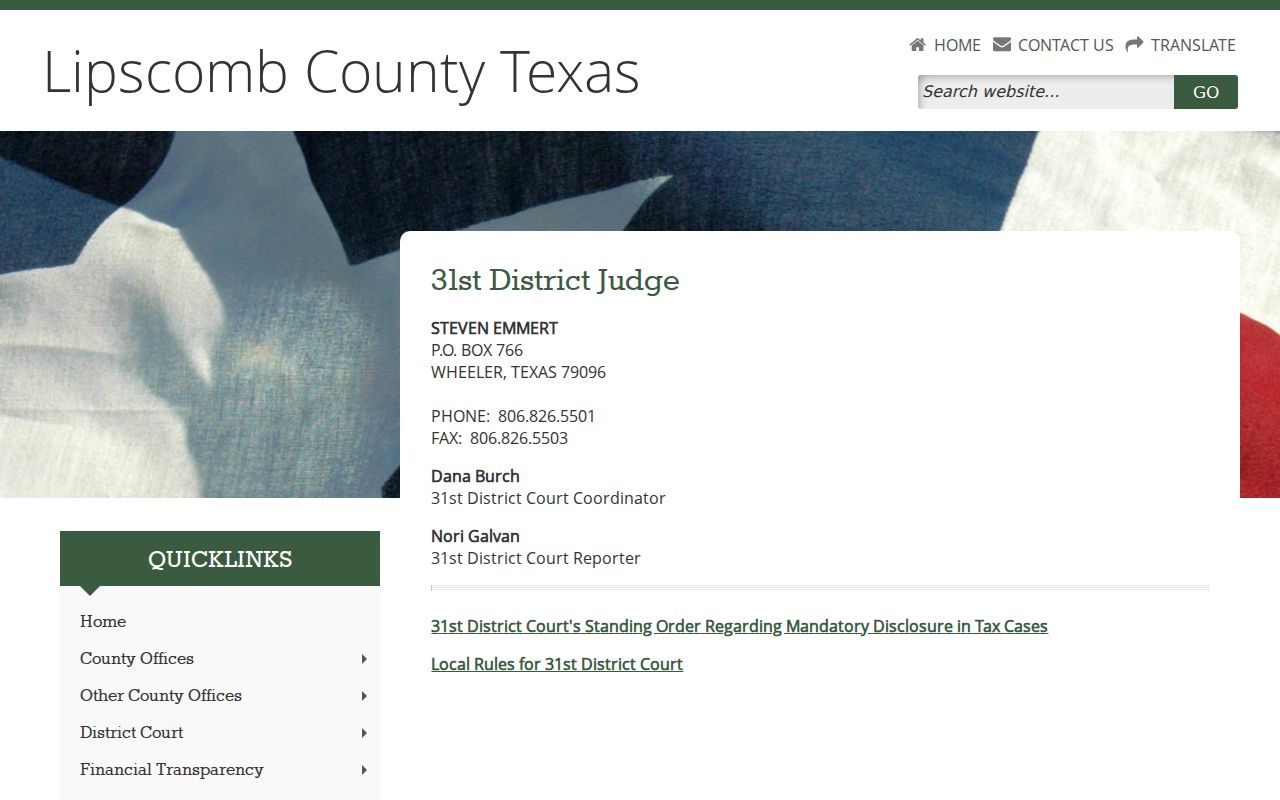
The Lipscomb County District Court page offers contacts and local-rules links, not an online warrant roster.
Handling an Arrest Warrant in Your Name
Confirm the details first. Get the court, the charge, the cause number, and the current status from an official Lipscomb County office. Then talk to a lawyer. Depending on the case, the court may take up a voluntary surrender, a bond, or a motion to recall or quash the warrant. The Sheriff serves process. It cannot give legal advice or set a court's conditions. For the county's office map and case routing, use the Lipscomb County warrant records overview.
Important: Talk with a lawyer before arranging a surrender; an active arrest warrant can be executed by an officer who encounters it.